

Flooding in Central Florida is a growing concern, costing the region nearly $8 billion annually. With flat terrain, rapid urbanization, and stronger storms due to climate change, understanding your property’s flood risk is critical. Here’s a quick summary of what you need to do:
- Check FEMA Flood Maps: Identify your flood zone and insurance requirements.
- Evaluate Property Elevation: An Elevation Certificate can help assess your flood vulnerability and reduce insurance costs.
- Review Past Flood Data: Historical events reveal patterns and risks beyond official maps.
- Get Flood Insurance: Standard homeowners insurance doesn’t cover flood damage. Consider NFIP or private insurance.
- Make Home Improvements: Elevate utilities, protect your foundation, and improve drainage.
- Prepare an Emergency Plan: Stock up on supplies, map evacuation routes, and stay informed.
Quick Fact: 40% of flood claims come from properties outside high-risk zones. Don’t assume you’re safe without proper assessment and preparation.
To protect your property and reduce damage, follow these steps and consider working with local experts for flood restoration and recovery.
How Can I Determine My Flood Risk and Find the Right Flood Insurance Policy in Florida?
How to Assess Flood Risks
Evaluating your property’s flood risk in Central Florida involves a step-by-step process to identify potential threats and take appropriate precautions. Here’s how you can approach it effectively.
Reading FEMA Flood Maps
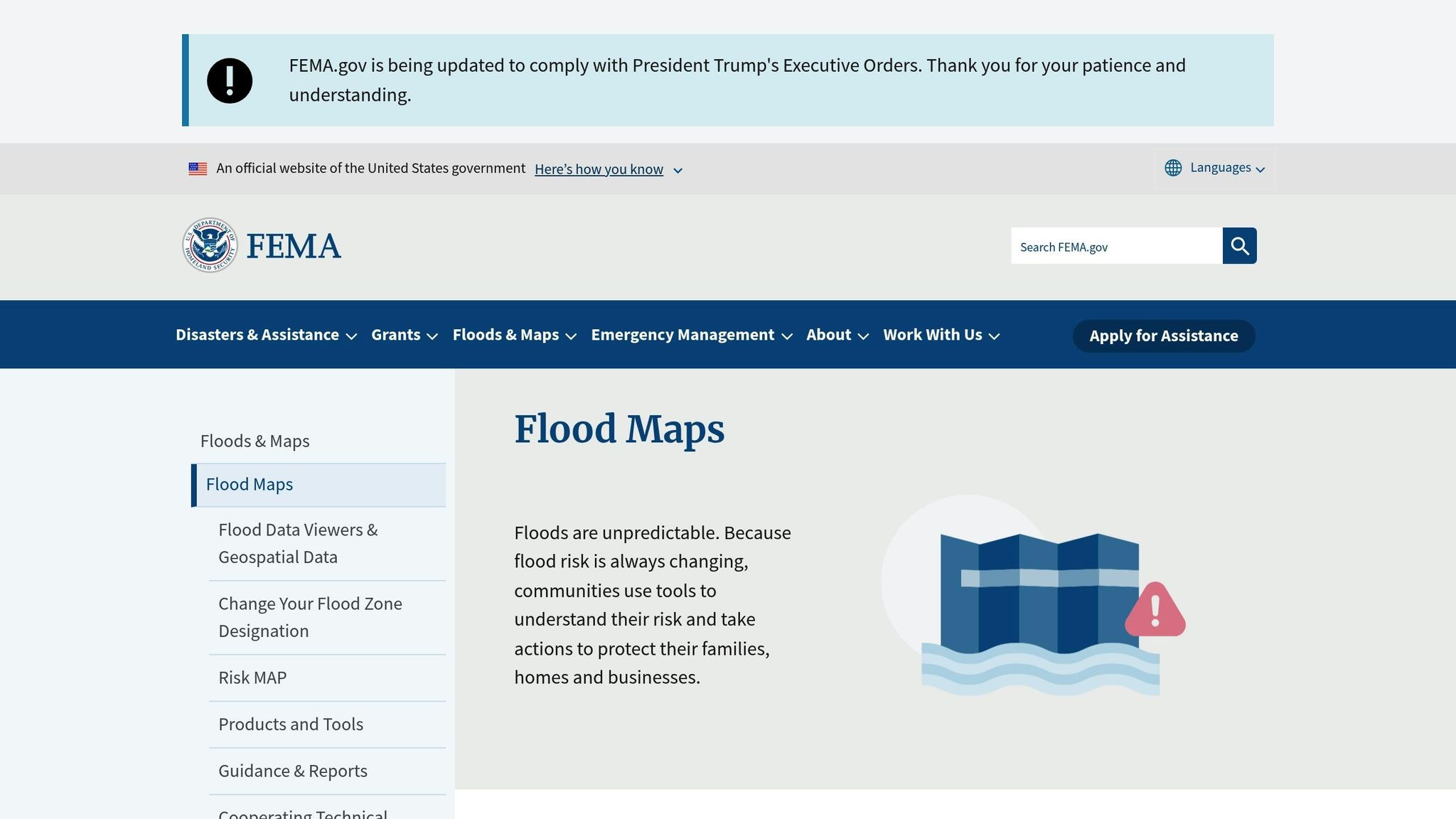
FEMA’s Flood Insurance Rate Maps (FIRMs) are a key resource for understanding flood risks. These maps classify areas based on their likelihood of flooding, which helps guide insurance decisions and property protection plans.
| Flood Zone | Risk Level | Description | Insurance Requirement |
|---|---|---|---|
| A or V | High Risk | 1% or higher annual flood chance | Mandatory with federally backed mortgage |
| B, C, or X | Moderate-Low | Reduced but not eliminated risk | Recommended but not required |
| AE | High Risk | Base Flood Elevation determined | Mandatory with federally backed mortgage |
To check your flood zone and risk level:
- Visit the FEMA Flood Map Service Center website.
- Enter your property address.
- Identify your flood zone designation.
- Review the Base Flood Elevation for your area.
"Floods are unpredictable. Because flood risk is always changing, communities use tools to understand their risk and take actions to protect their families, homes and businesses." – FEMA
Property Elevation Analysis
Your property’s elevation plays a crucial role in determining its vulnerability to flooding. Specifically, the height of your building’s first floor in relation to potential flood levels can affect both your risk and insurance costs.
An Elevation Certificate (EC) provides detailed information, including:
- The building’s location and characteristics.
- Flood zone classification.
- The lowest floor elevation.
- A comparison with the Base Flood Elevation.
This data helps identify whether additional flood protection is needed. FEMA notes that the higher your first floor is above the Base Flood Elevation, the lower your flood risk and insurance premiums are likely to be.
Past Flood Events
Examining historical flood data offers valuable insights into actual flood risks. While maps provide a general overview, past events can reveal patterns and vulnerabilities specific to your area.
Key factors to explore include:
- Previous flood depths in your region.
- Types of flooding, such as storm surge, river overflow, or heavy rainfall.
- Frequency of past flood events.
- Seasonal trends.
For instance, a 2023 study by the First Street Foundation found that the number of U.S. properties at risk of 1-in-100-year flooding is 2.2 times greater than FEMA maps indicate. This highlights the importance of looking beyond official maps when assessing risk.
Even properties in moderate-to-low-risk zones account for 40% of all flood claims. This underscores the need for a thorough evaluation, no matter where your property is located in Central Florida. By combining these methods, you can develop a more informed and strategic approach to flood protection.
Steps to Protect Your Property
Getting Flood Insurance
Did you know that standard homeowners insurance won’t cover flood damage? If you’re serious about safeguarding your property, you’ll need flood insurance. You have two main options:
| Insurance Type | Coverage Limits | Average Annual Cost | Special Features |
|---|---|---|---|
| NFIP | $250,000 for building / $100,000 for contents | $700-$786 | 30-day waiting period |
| Private Insurance | Higher limits available | $1,479 | Customizable coverage, shorter waiting periods |
When choosing an insurance plan, consider these key factors:
- Flood zone designation: Is your property in a high-risk area?
- Value of your property and belongings: Ensure coverage matches your needs.
- Budget for premiums and deductibles: Balance affordability with protection.
- Additional coverage options: Look for policies that meet specific needs.
As Carolyn Kousky aptly noted, “We definitely need more outreach and education about [flood] risk”. Insurance is a critical first step, but don’t stop there – modifying your property can further reduce risks.
Home Improvements for Flood Protection
Making targeted home improvements can significantly reduce flood damage, especially in areas like Florida, where rising sea levels are a growing concern. Here are some upgrades to consider:
- Foundation Protection: Evaluate your foundation for vulnerabilities. Elevating it can cost between $30,000 and $100,000 but provides solid long-term protection.
- Drainage Improvements: Ensure proper grading around your home, extend downspouts, and install flood vents to redirect water.
- Utility Protection: Raise essential utilities like electrical panels, HVAC systems, and water heaters to keep them safe from floodwaters.
- Exterior Reinforcement: Apply water-resistant coatings and sealants to exterior walls to minimize water intrusion.
These measures can make a big difference, but they work best when paired with a solid emergency plan.
Creating a Flood Emergency Plan
A well-thought-out emergency plan is essential for protecting both lives and property during a flood. Here’s how to get started:
- Communication Strategy: Establish clear communication channels. Designate an out-of-town contact and sign up for local emergency alerts.
- Emergency Supply Kit: Keep these essentials ready in waterproof containers:
- Important documents
- Medications and emergency supplies
- Battery-powered radio
- Flashlights with extra batteries
- First aid kit
- Evacuation Protocol: Identify multiple evacuation routes and locate nearby shelters. Always follow official evacuation orders.
"Turn around, don’t drown – Don’t drive through flooded roads and don’t drive around road barriers. More people drown in their cars than anywhere else." – Volusia County Emergency Management
For added preparedness, stock up on emergency flood control supplies like sandbags, plastic sheeting, hay bales, and concrete barriers. And remember, your plan isn’t a one-and-done deal – update and practice it regularly to stay ready.
sbb-itb-c95f159
Professional Flood Restoration
Flood damage racks up an astonishing $13 billion annually in the U.S., with the average homeowner facing claims exceeding $10,000. The key to minimizing damage? Act quickly. Mold can start growing in as little as 24-48 hours.
Signs You Need Professional Help
Certain warning signs indicate it’s time to call in the experts. Here’s what to look out for:
| Warning Sign | What to Look For | Why It’s Serious |
|---|---|---|
| Structural Issues | Sagging ceilings, warped floors, foundation cracks | Could mean your home’s structural integrity is at risk |
| Water Damage | Wall or ceiling stains, wet insulation, water seeping from outlets | Can lead to electrical hazards and mold growth |
| Health Concerns | Musty smells, visible mold, persistent dampness | May trigger respiratory problems and other health issues |
"Water damage doesn’t fix itself, but only gets worse with time. If you notice any signs of water damage in your home, immediate action can save you both time and money." – Florida Fire & Flood
Spot any of these signs? It’s time to bring in professional flood restoration services.
CEO Restoration‘s Flood Services
For Central Florida residents, CEO Restoration is a trusted name in flood recovery. Rated 4.9/5 by 91 reviewers, they offer round-the-clock services that include:
- Emergency Response: Available 24/7, with a 30-minute response time
- Water Extraction: Rapid removal of standing water
- Structural Drying: Advanced dehumidification to prevent further damage
- Mold Prevention: Proactive measures to stop mold before it starts
- Insurance Assistance: Help with direct insurance billing
"CEO Restoration was such a blessing, specifically Rod and his team. In the worst situation a homeowner can face, they were heaven sent. They not only communicated every step of the way, but they were at our home daily – even weekends, trying to help us salvage the new floors we had installed the week before. They also took the time to give us tips on what to look for in our insurance policy moving forward to fully protect in case of a disaster. Even after their work was done, they checked in on us and gave us advice on what to do next." – Joy Weinrich
Their local expertise ensures a faster and more effective recovery process.
Working with Local Experts
The average flood recovery cost per household hovers around $7,800. Hiring local professionals can make all the difference. Here’s why:
- Quick Response: Local crews arrive faster, limiting the extent of damage.
- Regional Knowledge: Familiarity with Central Florida’s flood risks and building codes.
- Insurance Navigation: Expert help in managing claims and paperwork.
- Ongoing Support: Continued care and follow-up, long after the initial cleanup.
"I was overwhelmed by the numerous restoration companies claiming to specialize in mold removal, but CEO Restoration truly stood out. From the initial consultation to the final walk-through, their team proved knowledgeable, reliable, and prompt. What impressed me most was their commitment to quality workmanship – if something didn’t meet their high standards, they took the initiative to correct it." – Crystal Medina
When it comes to flood recovery, relying on experienced local professionals can save you time, money, and peace of mind.
Conclusion: Safeguarding Against Floods
Flood risk assessment in Central Florida requires well-planned, data-driven actions to mitigate potential damages. According to FEMA, properties in high-risk areas face at least a 25% chance of flooding over the course of a standard 30-year mortgage. This highlights the urgency of taking proactive steps to protect homes and communities.
Effective flood protection hinges on three key areas:
Assessment and Understanding
- Regularly review FEMA’s flood maps to understand your property’s risk level and its elevation compared to the Base Flood Elevation (BFE) .
- Be aware of Florida’s updated building requirements, which mandate that homes in flood zones must be constructed at least one foot above the BFE.
Structural Protection
- Install flood vents to reduce pressure on walls by allowing water to flow through enclosed spaces.
- Elevate critical utilities, such as electrical panels and HVAC systems, to minimize damage during floods.
- Apply waterproofing techniques to fortify your home against water intrusion.
These strategies not only help safeguard your property but also ensure you qualify for proper insurance coverage and can access professional restoration services quickly when needed.
The financial and human toll of floods in Florida is staggering, with individual events sometimes causing over $1 billion in damages. Even more concerning, nearly half of all flood-related deaths occur when individuals attempt to drive through flooded areas. Just six inches of moving water can knock a person off their feet, and one foot is enough to carry away most vehicles.
It’s crucial to note that standard homeowners insurance doesn’t cover flood damage. Partnering with flood restoration professionals who understand the unique challenges of Central Florida can mean the difference between manageable repairs and overwhelming losses. Reach out to your local floodplain administrator to gain insights into the specific flood risks and regulations in your community.
FAQs
How can I find out if my property in Central Florida is at risk of flooding?
To determine the flood risk for your property in Central Florida, begin by reviewing FEMA’s flood zone maps. These maps categorize areas based on their flooding likelihood, with properties in zones marked A or V generally facing a higher risk. For more precise, localized information, reach out to local floodplain managers or city officials.
You can also use online tools that let you input your address for a quick flood risk assessment. Knowing your property’s flood risk is essential for taking steps to safeguard your investment and stay safe during severe weather.
What’s the difference between NFIP and private flood insurance, and how do I choose the best option for my property?
The National Flood Insurance Program (NFIP) and private flood insurance differ in several important ways, including coverage limits, flexibility, and added benefits. NFIP policies, backed by the federal government, cap building coverage at $250,000. Private flood insurance, however, often provides much higher limits – sometimes over $1 million – and includes more tailored options like replacement cost coverage, additional living expenses, and protection for personal belongings.
Choosing between the two depends on factors like your property’s flood risk, the coverage you require, and your budget. If your home is in a high-risk flood zone or has a higher replacement value, the expanded coverage offered by private insurers might better meet your needs. On the other hand, NFIP could work well if you’re looking for basic, federally supported coverage, often at a lower cost. Speaking with an insurance professional can help you weigh your options and find the best fit for your situation.
What should I do immediately after my home is flooded to reduce damage and prevent long-term issues?
If your home has been hit by flooding, your safety should always be the top priority. Stay out of flooded areas until you’re certain they’re safe. Be cautious of dangers like live electrical wires or weakened structures. Once it’s safe to proceed, here’s how you can reduce the damage:
- Document everything: Take clear photos or videos of the damage. These will be critical for your insurance claim.
- Remove standing water: Use tools like buckets, pumps, or wet/dry vacuums to clear out water as fast as possible.
- Dry the area thoroughly: Open up windows and doors to increase airflow, and use fans or dehumidifiers to speed up the drying process.
- Get rid of damaged items: Safely dispose of water-soaked materials like carpets, furniture, or drywall to prevent mold from spreading.
After addressing the immediate concerns, contact your insurance provider to get the claims process started. For severe damage, you might want to call in professionals like CEO Restoration. Their team is available 24/7, specializing in flood restoration to help you recover as quickly and safely as possible.